
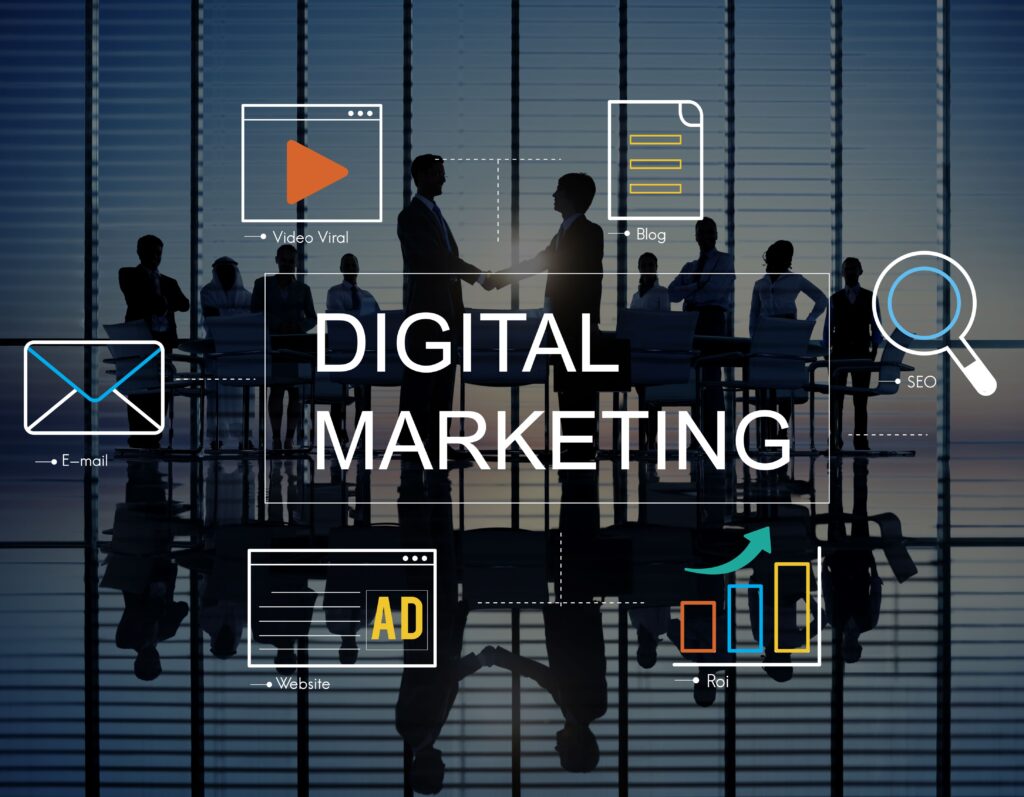
In today’s world, almost everyone and everything is online- from how we learn, shop, connect, to how businesses promote and communicate themselves. Traditional marketing methods like newspapers, billboards, and TV ads are still useful but they no longer hold the same power they once did. Instead, a new and more effective approach has transformed the whole way of marketing- it’s digital marketing.
But what exactly is digital marketing? How does it work? Why is it so important? And from where and how a beginner can start in digital marketing?
This blog will walk you through everything you need to know about digital marketing in simple words- its meaning, types, benefits, career opportunities and growth, and why it matters for the future. You will also get to know about my own journey into this digital space.
Table of Content
- What is digital marketing?
- Importance of Digital marketing
- The Main Types of Digital Marketing
- How Digital Marketing is Different from Traditional Marketing
- How to get started with Digital Marketing (for beginners)
- Career Opportunities in Digital Marketing
- Career Growth/Hierarchy and Salary-range
- Benefits of Digital Marketing (for businesses)
- Future of Digital Marketing
- Conclusion
- Frequently Asked Questions (FAQs) about Digital marketing
- My Journey: From Arts to Ads
What is digital marketing?
Digital marketing is about using the internet and digital platforms to promote products, services, or brands. Instead of relying only on physical ads like posters or flyers, businesses and brands use online tools like websites, search engines, social media, emails, and apps to reach customers.
In today’s world, it’s not just about being online-it’s about being visible in the right place, at the right time, to the right people. That’s exactly what digital marketing does!
In other words, digital marketing means reaching the right people, at the right time, with the right communication, through the right digital platform.
Think of it like this:
- When you see an ad on Instagram for a product you were just searching on Google- that’s digital marketing.
- When you receive emails from your favourite clothing brand or e-commerce platform regarding new launches or discounts- that’s digital marketing.
It’s everywhere, and it has changed the way businesses connect with people.
Importance of Digital marketing
In today’s world, if you’re not online- you are invisible. There are several reasons why digital marketing has become so important for businesses:
- Wider Reach- With the use of the internet, businesses can reach people globally rather than limiting to just local areas.
- Targeted marketing- You can reach exactly to the people you want for your business- based on age, location, interests, and even online behavior.
- Cost-Effective- Digital ads are often relatively cheaper than traditional TV or print ads. Even small businesses can run campaigns with even a small budget and get good results.
- Measurable results- unlike a billboard or newspaper ad, digital marketing shows real-time data. We can see how many people clicked, liked, shared or bought something.
- Data-driven decision- Digital marketing tools helps in optimising our marketing efforts and in taking decisions based on existing or gathered data.
- Building relationships- Social media and email marketing allow brands to talk directly with their customers and build a long-term relationship with two-way communication.
- 24/7 Availability- Your website,app or ads never sleeps; they work round the clock.
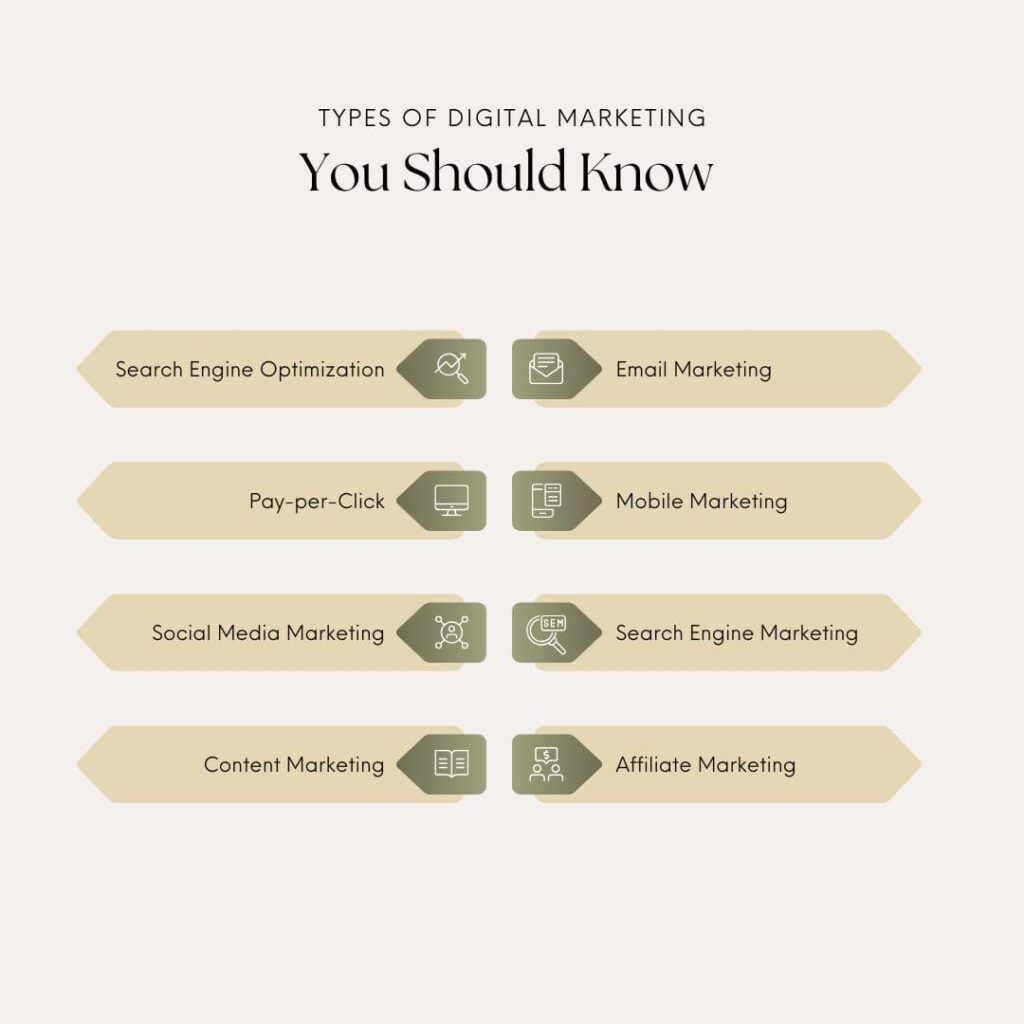
The Main Types of Digital Marketing
Digital marketing is a broad field with many branches. Let’s look at some major ones:
1- Search Engine Optimization(SEO)
SEO is about making your website come up high in search engine results pages(SERPs) organically. In simpler words, making websites show up when people search on Google, for example- suppose if your website is about travel or food and someone searches “best travel blog or food recipes in India” and your website appears on the first pages- that’s SEO at work.
It includes:
- On-page SEO- using the right keywords, heading and content on your website.
- Off-page SEO- backlinks from other trusted websites
- Technical SEO- improving website loading speed, mobile-friendliness, and user interface.
2- Search Engine Marketing (SEM)
In SEM, businesses promote their websites by increasing their visibility on search engine results pages(SERPs) through paid advertising.
It includes:
- Display ads & Shopping ads- visual ads(images, banners, product listings) that show up on search results or partner websites.
- PPC (Pay-Per-Click) advertising – you pay when someone clicks on your ad. Example- Google ads.
3- Social Media Marketing (SMM)
In digital marketing we leverage both organic and paid methods. Platforms like Facebook, Instagram, LinkedIn, Twitter, and YouTube are very powerful marketing tools. Brands and businesses use them to:
- Build awareness or visibility
- Share content
- Run paid ads
- Build brand or positioning
- Connect directly with customer and provide two way communication
4- Content marketing
“Content is king.” One thing that connects all marketing efforts of any brand is the content that it puts and publishes across multiple channels(platforms). Blogs, videos, images, e-books, podcasts, and infographics etc are all content. Content marketing means creating relevant, useful and valuable content to attract people. For example, a post that teaches styling tips or even this blog you are reading itself is identified as content marketing.
5- Email Marketing
One of the oldest yet most effective digital strategies. It helps brands personally connect with customers and send newsletters, offers, or product updates directly to your inbox. It helps build trust and customer loyalty and it is also used as retention marketing.
6- Influencer marketing
Brands collaborate with influencers(people with strong social media presence or influence) to promote their products. For example, a beauty or personal care brand sending products to a YouTuber for review.
7- Affiliate Marketing
In affiliate marketing, businesses reward affiliates(bloggers, creators or influencers) for driving traffic or sales, whatever brand’s objective is via referral links.
8- Mobile marketing
With smartphones ruling our lives, businesses target people through SMS, push notifications, mobile-friendly websites, and in-app ads.
9- Video marketing
YouTube, Instagram Reels, TikTok, and even Facebook videos are huge platforms for video marketing. Everyone prefers watching short-form, engaging videos over reading long text ads. We can include this in content marketing as well, if not separately.
How Digital Marketing is Different from Traditional Marketing
Traditional Marketing vs Digital Marketing- It can be better understood through given below table:
| Aspect | Traditional Marketing | Digital Marketing |
| Reach | Limited (local or national) | Global |
| Cost | Expensive (TV, print) | Affordable (social media, SEO) |
| Interaction | One-way communication | Two-way (audience feedback) |
| Tracking Results | Difficult | Easy with analytics |
| Availability | Time and place bound | 24/7 online presence |
Digital marketing offers more opportunities, especially for small businesses and startups.
How to get started with Digital Marketing (for beginners)
For students or beginners, learning digital marketing can be an exciting journey yet starting with digital marketing can feel overwhelming because it’s a vast area and has many branches such as SEO, SEM, content, ads, analytics, and more. Below is a simple roadmap:
- Learn the basics- One should start from getting a broad basic understanding of digital marketing and its concepts using sources like YouTube, blogs or related articles. Also there’re some very good and reputed free courses available to begin with by Google, HubSpot, and Coursera.
- Take Paid courses- After getting a good knowledge of digital marketing you can move to the paid courses(professional courses) to deepen your understanding. It will also help you in identifying your area of interest.
- Practice- You will develop the skill while practicing, just learning will not work until you get your hands dirty. Start small- Create a blog, start managing a social media page, or run a small budget campaign.
- Use tools- Start using tools slowly and steadily. Can start with beginner friendly tools like Canva(for design or content), Google analytics(for tracking and results measurement), and Mailchimp(for email marketing)
- Choose an Area of interest- Once you are familiar with everything you need to know about digital marketing and start working in the industry, now you can decide whether you want to focus on content writing, social media, analytics, or SEO etc.
- Build a Portfolio- Building a Portfolio is the best practice, it provides credibility and make you stand out of the crowd. Put everything together such as your projects, campaigns, and case studies to showcase your learning.
- Stay Updated- Digital marketing trends change regularly as it is an ever-evolving field. Follow blogs, podcasts, and experts to keep updated about new innovations.
Consistency is very important, no one becomes a digital marketer in a day, it’s a long-term game. You may not get everything on your first day but slowly you’ll achieve proficiency.
Career Opportunities in Digital Marketing
Digital marketing is a field that’s evolving and expanding day by day and so the demand for good marketers is always significant all across the world. Every business- whether it is small or multinational- needs a digital/online presence, which means more jobs, freelancing opportunities, and even chances to start your own agency or build business.
Here are some exciting career paths:
1- SEO specialist
Role: Improve website rankings on search engines.
Skills needed: keyword research, backlink building, analytics, Google search console
Why it’s in demand: Businesses wants to appear at the top on the search engines(Google)
2- Social Media Manager
Role: Handle brands presence on all social media platforms such as Instagram, Facebook, LinkedIn, X, etc.
Skills needed: Creativity, strategy, insight, trend research, ads management, community engagement.
Why it’s in demand: social media is the frontline of brand visibility.
3- Content Marketer/ Copywriter
Role: Create engaging content such as blogs, articles, ads, posts, and website copy.
Skills needed: Writing, storytelling, creativity, keyword usage, editing
Why it’s in demand: Content is the heart of digital marketing – every brand needs good content.
4- Paid Ads Expert (PPC specialist)
Role: Run ad campaigns on Google, Facebook, Instagram, LinkedIn, etc.
Skills needed: Ad’s targeting, budgeting, A/B testing, analytics
Why it’s in demand: Businesses want quick and measurable results.
5- Email Marketing Specialist
Role: Manage automated emails, newsletters, customer engagement
Skills needed: Copywriting, segmentation, automation tools(Mailchimp, HubSpot)
Why it’s in demand: Email is still one of the highest ROI channels(retention marketing)
6- Digital Marketing Analyst
Role: measure campaign performance and provide insights
Skills needed: Google Analytics, data visualisation, reporting
Why it’s in demand: Data-driven marketing = better ROI
7- Influencer Marketing Manager
Role: Collaborate with influencers to promote products
Skills needed: Negotiation, communication, trend research
Why it’s in demand: Influencers are trusted voices that drive conversions, specially in this GenZ era as they believe influencers more than optimised search results.
8- Affiliate Marketing Manager
Role: Promote products of other companies and earn commission.
Skills needed: Blogging, SEO, social media, networking
Why it’s in demand: Passive income and partnership with brands
9- Video Marketer
Role: Create video content strategies and grow brands or businesses
Skills needed: Story telling, Video editing, creativity, platform optimised content
Why it’s in demand: Video is the highly consumed content online
10- Growth Hacker
Role: Acquire prospective customers faster, rapid growth, run experiments and analyse data
Skills needed: Data analysis, creativity, basic tech knowledge, adaptability
Why it’s in demand: Startups and businesses seek fast, measurable, and cost effective growth in today’s competitive environment
11- Digital Marketing Manager (All-rounder)
Role: Oversee all online campaigns, coordinate teams, create strategies
Skills needed: Leadership, multi-channel knowledge, analytics
Why it’s in demand: Businesses need experts who can handle all aspects.
Career Growth/Hierarchy and Salary-range
- Entry-level positions: (Interns, Analysts, Executives)- offers hands-on learning (~₹3-5 LPA)
- Mid-level positions: (Strategists, Specialists to Team leaders, Managers)- more responsibilities, higher pay(~₹6-15 LPA)
- Senior-level positions: (Head of digital marketing, Digital marketing Director, Chief Marketing Officer)- Leadership roles, high salaries(~₹20-30 LPA)
- Freelancing & Entrepreneurship: work independently with clients, or start your own digital marketing agency.
Benefits of Digital Marketing (for businesses)

- Better Brand visibility- Being online means being discoverable and better reach. It increases the brand’s credibility and legitimacy.
- Improved Customer Insights- Analytics shows what works and what doesn’t, and also how customers behave.
- Personalisation- With the help of digital marketing businesses can provide more personalized and tailored offers/content to customers.
- Effective communication- Businesses use two-way communication to connect and engage with people effectively.
- Higher ROI: Data helps in getting higher ROI. Even small campaigns can generate significant results.
- Competitive Advantage- Staying updated with digital trends keeps businesses ahead in the race.
Future of Digital Marketing
The future is exciting and full of possibilities. Some major trends shaping the future are:
- AI, Chatbots & Automation: Smarter tools will handle content, ads, customer service for better user experience, and customer journey with precision
- Hyper-Personalisation: Brands will scale tailored experiences such as hyper-targeted ads & recommendations using customer data as they’re already using personalisation.
- Video & Short-form content: Reels, Shorts, and live streaming will dominate.
- Voice search: Optimising content for Alexa, Siri, and Google assistant (long-tail keywords)
- AR & VR marketing: Brands will create immersive experiences in virtual worlds. AR filters, visual try-ons, and 3D product experiences will make online shopping more interactive.
Conclusion
Digital marketing is no longer an option- it’s a necessity. Whether you’re a student, professional, small business owner, or entrepreneur, understanding digital marketing can open doors to endless opportunities. It helps individuals to become a personal brand.
In simple words- Digital marketing is the art of connecting with people using digital channels in a meaningful, smart and impactful way.
If you’re looking to grow your business, build a brand, or even start a career in this field- digital marketing is always a yes and the way forward.
Now, you’ve known all about digital marketing, let’s look at some FAQs and then you can take a look into My journey: From Arts to Ads.
Frequently Asked Questions (FAQs) about Digital marketing
1. Is digital marketing a good career option?
Yes! Digital marketing is one of the fastest-growing career fields. With businesses shifting online, skilled marketers are in high demand. It is a very vast field and offers flexibility, competitive salaries, and many opportunities for growth.
2. Do I need a degree to start a career in digital marketing?
Not necessarily. Having a degree is a good thing but digital marketing offers many career opportunities and does not always require a formal degree. Skills and creativity are more important. Many professionals who don’t have academic background in this field build successful careers by learning through online courses, certifications, and hands-on practice.
3. How long does it take to learn digital marketing?
It depends on your dedication. The basics can be learnt in 3–6 months, but becoming an expert requires continuous practice and staying updated with trends. Consistent learning and keep polishing your skills are very important like any other field or industry.
4. Can small businesses or startups benefit from digital marketing?
Absolutely! Digital marketing is cost-effective and scalable. Small businesses can start with organic digital marketing efforts like using SEO to rank locally, use social media for visibility, and then, can run budget-friendly ad campaigns on social media, and engage customers directly.
5. Which is better: Traditional marketing or Digital marketing?
Both have value, but while traditional methods like TV, print & radio build awareness and engagement, digital marketing offers- targeted reach, real-time data or measurable results, global visibility, and cost-effectiveness. For most modern businesses, digital marketing is more effective.
6. What are the best tools for digital marketing beginners?
Some beginner-friendly tools include:
- Canva (design)
- Google Analytics (tracking performance)
- SEMRush / Ubersuggest (SEO research)
- Mailchimp (email marketing)
- HubSpot (Automation)
- Buffer / Hootsuite (social media management)
7. Can I do digital marketing as a freelancer?
Yes. Many freelancers offer services like social media management, SEO, content writing, or running ad campaigns. With experience, freelancing can even turn into your own digital marketing agency.
8. Can digital marketing be learned without technical knowledge?
Yes. While some technical skills may help, but not having any technical knowledge is totally fine. Digital marketing mainly requires creativity, communication, and analytical thinking. As long as you intend to learn, it’s not a big deal at all.
9. Can students use digital marketing for personal growth?
Definitely. Students can create blogs, personal brands, or even start freelancing while still studying.
10. What is the difference between digital marketing and online marketing?
Both terms are often used interchangeably, but digital marketing includes all digital channels (including SMS, apps, and websites), whereas online marketing mainly focuses on internet-based methods.
My Journey: From Arts to Ads
An Unexpected Road
A few years back, if you had told me that I would be working in the world of digital marketing, talking about SEO, ad campaigns, and ROI, I probably wouldn’t have believed you and would’ve laughed and gone back to my geography notes.
I started my journey with the arts stream back in school – surrounded by books, theories, stories from history, canvas, colours and so on. But life makes you go to the paths you never thought you’d take. I went from learning the essence of the constitution to creating blog posts and ad briefs. From articles to advertisements. From Arts to Ads.

Why I Chose Arts
Choosing arts wasn’t a last-minute decision or a ‘no-other-option’ situation for me like many people assume. I was pretty good in maths, but I was more inclined towards drawing, creativity and subjects like geography, polity and history because they weren’t just about memorising facts; they were about understanding the surroundings or theories in practical terms. While others were calculating equations or solving chemical reactions, I was learning how to be subjective, see the same thing with multiple perspectives, debate on a social issue, or analyse a historical event. It gave me the best habit of asking and finding the “why” behind anything.
Shift to Digital Marketing
After completing my studies in arts, I found myself at a crossroads. I enjoyed the journey but wasn’t sure if I’ll be able to turn that into a career and if there will be enough opportunities. At that point I feel that I don’t have any technical skills.
Here, digital marketing comes into the picture. I got introduced to digital marketing after knowing about a friend of mine who was doing great in this field, having the same arts background as me.
It lit a spark of curiosity and made me interested to learn more about digital marketing. After knowing a little more about it, I decided to step into the world of digital marketing – a world I knew almost nothing about at the time.
Exploring a New World and Learning the Language of Ads
To be honest, my first few days in digital marketing felt like I had landed in a whole different world where everyone spoke a new language. Terms like SEO, PPC, CTR, ROI, and marketing funnel sounded like some jargon and were overwhelming.
But I started slow. I read articles and blogs and watched videos to get a broad picture of digital marketing and afterwards enrolled in a course. Soon, I was able to get through the fundamentals of marketing and its practical use. Slowly, I began to understand that digital marketing or advertising isn’t just about ‘selling’ – it’s about connecting with people, solving problems, and telling stories in ways that resonate.
Challenges Along the Way
Shifting from arts to ads wasn’t an easy and straight road; there were so many ups and downs which one should have faced. It stretches you and gives you a very hard time as you start.
There were moments when I just felt like giving up, such as when I was introduced to technical tools like Google Analytics and concepts like Porter’s five forces. (when I started learning the technical things in digital marketing, like ad targeting, analytics, keyword research and so on, which were completely new to me.)
There was also the lack of confidence at the time, as I was new in the field, surrounded by people who already had some experience in digital marketing or had related academic backgrounds. It sometimes made me wonder if I truly belong and made the right decision to choose digital marketing.
But with every step and challenge, I learnt something new and gained my confidence back without falling apart. I recognised my strengths – that I can adapt, stretch and grow no matter how challenging the task is.
“Good and strong things take time to build.”
Advice for Anyone Thinking of Shifting to Digital Marketing
If you are reading this and also considering a career shift – whether it’s from arts to ads or any other field – here’s what I’ve learnt from this journey:
- Don’t let your past skills go in vain; don’t think of them as a waste. Leverage your existing skills. For instance, coming from an arts background, creativity, a good sense of visuals, and writing are highly valuable in marketing.
- Start small and keep learning – start with free courses and then go for a paid course.
- Be open to changes and ready to learn constantly because digital marketing is an ever-evolving world where staying updated is a key for staying relevant.
- Don’t fear the technical side of digital marketing; the more you learn, the more you’ll become confident and comfortable.
- Value your own uniqueness – your background gives you a different perspective to see and approach things.
If you are a beginner, you can refer the below playlist to begin with and for a broad understanding of digital marketing:
Conclusion: From Maps to Metrics
As I continue my journey in the world of ads and digital marketing, I see endless possibilities and opportunities waiting. The industry is not static but evolving every single day.
So, what’s ahead? I probably:
- Grow my personal blog into a space where I can share about both life and marketing.
- Work on campaigns that not just sell but inspire and connect.
- Keep learning, because life is all about learning new things.
Also, there’s one thing that I’ve learnt – no knowledge ever goes to waste. For example, in marketing, you have to ask, ‘Why will people care?’ And that’s what Arts had trained me – to ask ‘Why’ and questions like this all the time.
So, here I am, a former arts student, now crafting blog posts and campaign copies. From theories to analytics, from maps to metrics – it all seems like an unexpected reality, which I’ve never imagined or thought of. But yes, here we are, and the best part is…? This is not the end of the journey; it’s just the beginning of a new one.
This is my journey, what about yours??